

A waterbed can only feel as good as the support sitting beneath it. The best waterbed sleep starts with a foundation that helps the whole bed feel steady and comfortable. A well-matched base gives the mattress the support it needs to perform the way you expect.
Foundation choices can affect how a waterbed feels, holds its shape, and handles daily use. Waterbed Bargains offers foundations and other waterbed products designed to help create a better overall setup. Choosing the right support can also help you get more from the mattress you already own.
Good sleep starts lower than many people realize.
Read on to learn why the right foundation deserves just as much attention as the mattress.
Key Takeaways
- The foundation can change how steady, level, and comfortable a waterbed feels.
- Poor support underneath can make a good mattress feel like the problem.
- The right base helps the whole waterbed work better night after night.
Weight Needs Somewhere Safe to Go
A filled waterbed puts constant pressure on the structure beneath it. A solid foundation helps keep the load controlled, so the bed feels secure during normal use.
Center Support Keeps the Middle From Sinking
The middle of the bed can become a weak area if the base lacks enough support underneath. A strong center section helps keep the frame from dipping as weight settles across the mattress. That can protect the bed from developing an uneven feel over time.
Firm Contact Helps Reduce Movement
A foundation should sit flat against the floor without rocking or shifting. Small gaps underneath can let the base move when someone gets in, turns over, or gets out. Stable contact helps the entire setup feel quieter and more solid.
Weak Sections Can Stress the Frame
A soft or damaged part of the base can force nearby sections to carry more strain. That extra stress may lead to loose joints, creaking, or changes in how the frame sits. Checking the foundation for weak spots can help prevent those problems from spreading.
Deck Panels Should Stay Flat
A waterbed can feel uneven when the deck underneath starts to bow. Small dips can change where the water settles and make one part of the mattress feel lower than another. Flat panels help the mattress keep a more even shape across the bed.
Uneven decking can also make the bed feel less stable during the night. Shifting weight may become more noticeable when the surface below is no longer level. Keeping the deck flat gives the mattress a steady base to rest on.
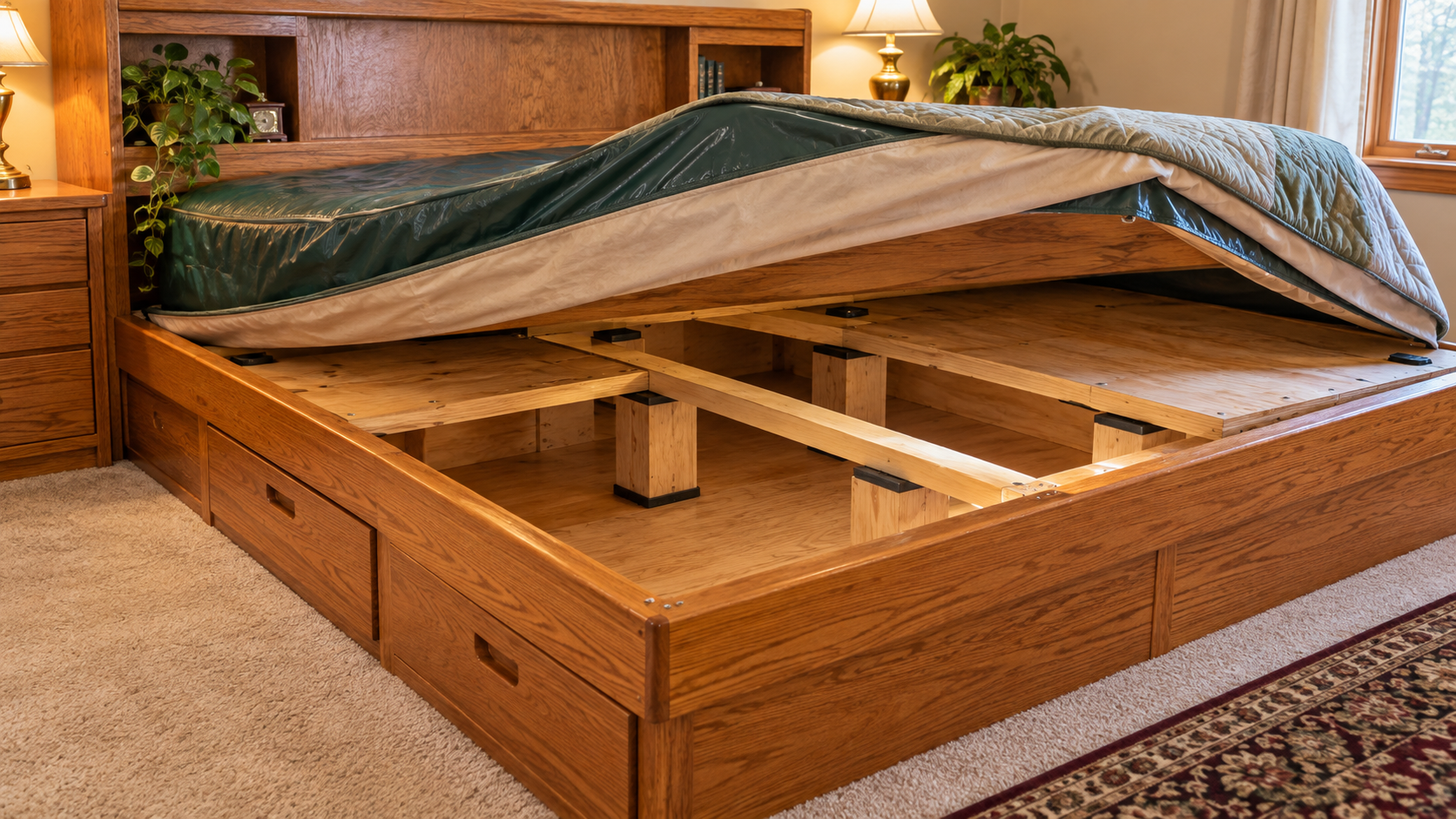
Center Supports Carry the Hidden Load
The middle of the bed can take more pressure than it looks like. If the center supports are missing or spaced poorly, the deck may start sinking little by little. That shift can change how the mattress feels before anyone notices visible damage.
A weak center can also make the bed feel softer in one area and firmer in another. Your body may start settling into the low spot night after night. Over time, that uneven support can make the whole setup feel less comfortable.
Solid center pieces help keep the deck where it belongs under the heaviest part of the bed. Good placement can also reduce strain on the frame around the edges. Checking those hidden supports can make a big difference in how steady the waterbed feels.
Pedestal Placement Changes the Support
A pedestal does more than lift the bed higher. Its position helps decide how the weight moves through the frame and down to the floor. If the base sits too far to one side, some areas may carry more strain than others.
Poor placement can also make the deck feel less even. One section may flex more because it does not have enough support directly beneath it. That small shift can affect how steady the mattress feels during normal use.
A centered pedestal gives the foundation a stronger starting point. The load can spread more evenly instead of pulling harder on one side. Proper placement helps the whole bed feel more balanced and secure.
Can the Wrong Foundation Make a Waterbed Feel Too Soft?
Yes, a weak foundation can make the mattress feel softer than it should. The base may flex under your body and add extra drop below the mattress. That movement can make the bed feel like it needs more water even when the fill level is fine.
The problem can be easy to miss because the mattress still looks normal from above. A soft spot in the foundation may be doing more of the sinking than the mattress itself. Checking the base first can help rule out a support issue before changing anything else.
Floor Level Matters More Than It Seems
A waterbed can feel uneven even when the frame and foundation are in good shape. A sloped floor can quietly change how the mattress sits and how your weight feels across the bed.
Doors and Walls Can Give You a Clue
A room that looks level may still have a slight slope. Gaps under doors or uneven baseboards can hint that one side of the floor sits lower than the other. Those signs can be worth checking before the bed is fully set up.
Shimming Can Help Correct Small Differences
Minor floor changes may be easier to fix at the base than at the mattress. Proper shims can help bring the foundation back into a more level position. The goal is to support the whole base without creating new pressure points.
Recheck After the Bed Is Filled
The weight of a filled mattress can change how the foundation settles. A setup that looked fine while empty may shift slightly once the full load is in place. Checking the bed again after filling can catch movement before it starts affecting comfort.
Panel Seams Need Solid Support
Hidden seams can become trouble spots when deck panels do not have enough support underneath. The weight of a full waterbed can make those joints flex or shift over time. Even a small amount of movement can change how steady the surface feels.
Proper support under each seam helps adjoining panels stay lined up and firm. A weak joint may start to sag, creak, or separate as pressure builds across the deck. Keeping those connection points well supported can help the foundation stay solid night after night.

Edge Pressure Tests the Foundation Differently
Sitting on the edge puts a lot of weight into one narrow spot. That kind of pressure hits the foundation differently than lying across the whole mattress. A weak outer section may dip every time someone sits down or stands up.
Frequent use can make that small drop more noticeable over time. The frame may start to shift, and the deck can lose its even position near the side. Creaking or movement along the edge can be an early sign that support is wearing down.
Good edge support helps the bed stay steady during everyday use. It also reduces extra strain where people usually climb in and out. Keeping those areas firm can help the whole foundation hold its shape longer.
A Better Base Can Lead to the Best Waterbed Sleep
A comfortable waterbed needs solid support working underneath the mattress. Waterbed Bargains can help you choose foundation parts that keep the whole setup stable and balanced. Give the base the attention it deserves, and the rest of the bed has a better chance to feel right night after night.
Frequently Asked Questions
Does a waterbed foundation affect mattress movement?
Yes, the foundation can change how much movement you feel across the bed. A stable base helps the mattress respond more evenly when you turn or shift positions.
Can an uneven floor cause problems with a waterbed foundation?
Yes, an uneven floor can leave the entire setup sitting slightly off balance. Water may settle toward the lower side and change how the mattress feels.
Should I reuse an old foundation with a new waterbed mattress?
You can reuse an older foundation if it still fits the system and remains solid, level, and properly supported. Worn parts or a poor fit can keep a new mattress from feeling its best.
What should support the center of a large waterbed?
A large waterbed needs sturdy support beneath the center of the deck. Proper placement helps spread the weight instead of leaving the middle to carry too much pressure.
Can foundation damage make a waterbed frame shift?
Yes, weak or damaged support can allow parts of the frame to move out of position. Small shifts can affect the rails, deck, and overall feel of the bed over time.